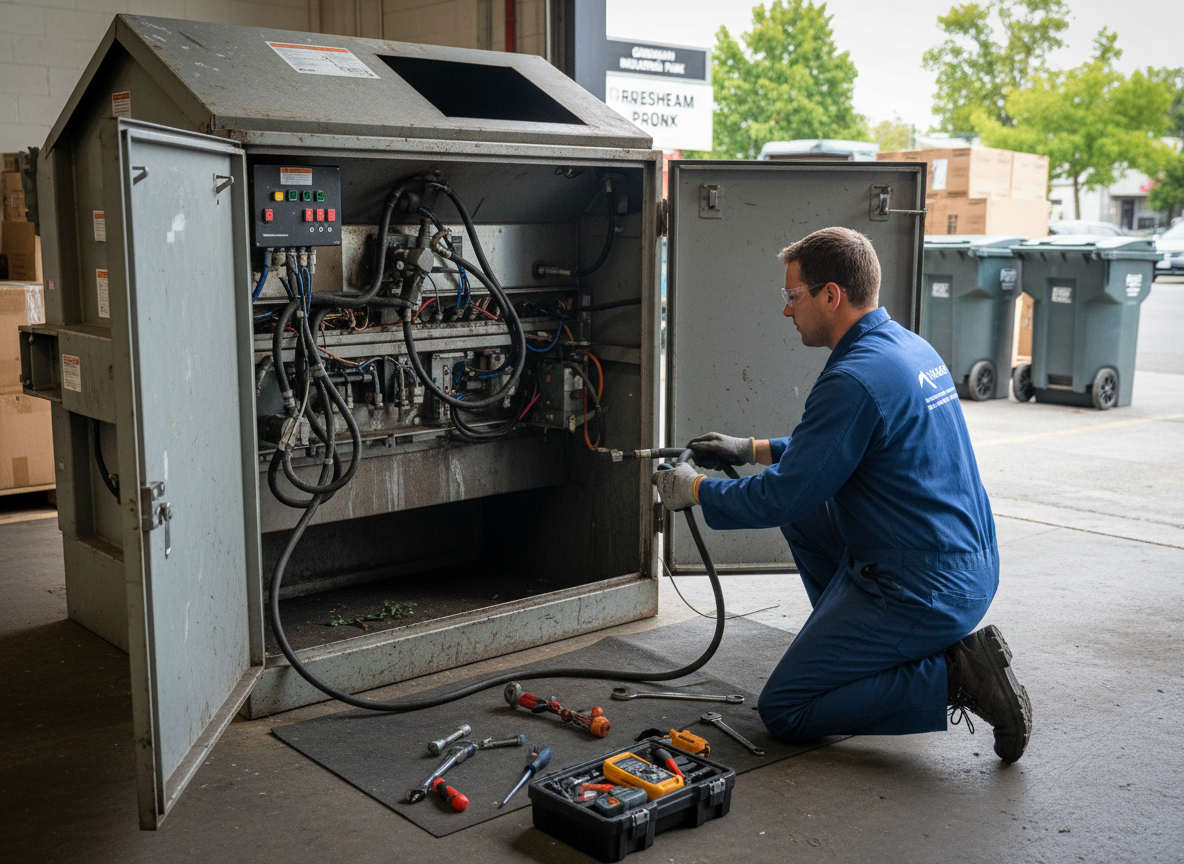
Trash compactors in Gresham homes often fail when moisture from wet winters seeps into the drive components and ram assembly. Older housing stock in Rockwood and Downtown neighborhoods, common in Multnomah County, frequently has compactors installed in garages or utility spaces with poor drainage. Occasional flooding near landmarks like Gresham Pioneer Cemetery accelerates corrosion on the motor and hydraulic lines, turning minor leaks into full breakdowns. Technicians at FluxMendCore routinely check seals and wiring that have degraded from repeated exposure to damp conditions rather than normal wear.
Mild summers do little to offset the damage done during the rainy season, so homeowners near Mt. Hood Community College or along SE Stark Street see the same seasonal pattern each year. Compactor rams can bind when debris mixes with standing water inside the unit, and the resulting strain on the motor leads to tripped breakers or burned windings. Repair work here requires isolating power at the panel first, then addressing both the mechanical jam and any electrical corrosion before the unit can be tested under load.
Local terrain and soil saturation around Portland’s eastern suburbs also affect how quickly water reaches appliance bases. In many Rockwood properties the compactors sit on concrete slabs that crack over time, allowing runoff to pool underneath. A thorough repair includes clearing the drain path, replacing rusted fasteners, and verifying the unit cycles without drawing excess current. These steps prevent repeat calls when the next heavy rain arrives.
Homeowners sometimes attempt to clear jams without shutting off power, which risks damaging the control board or causing injury. FluxMendCore techs always start by confirming the model’s wiring diagram and testing the safety interlock before any disassembly. This approach accounts for the specific installation quirks found in Gresham’s older single-family homes and keeps repairs focused on the actual failure point.
Technician insight
In Gresham, the thing that catches most people out with trash compactor repair is water from our wet winters pooling under the unit in older Rockwood homes. The concrete slabs crack, letting runoff reach the motor and ram, and homeowners often miss the early corrosion until the breaker trips.
Flood-Damaged Compactor in Rockwood
A homeowner in Rockwood reported the compactor failing after heavy rain. Inspection showed water had entered through a cracked slab and corroded the drive gear. We replaced the gear assembly, resealed the base, and restored full function without further flooding issues.
How it works
- 1
Initial Assessment
Arrive at the Gresham address, confirm power is isolated, and inspect the compactor for water intrusion or debris buildup common after wet weather.
- 2
Diagnosis
Test motor, ram travel, and seals while checking for corrosion from Multnomah County flooding or humidity in Rockwood basements and garages.
- 3
Component Repair
Replace damaged drive parts, clean or reseal the chamber, and address any electrical issues caused by moisture near Downtown or SE Stark Street homes.
- 4
Testing and Verification
Run multiple cycles under load, confirm proper drainage, and ensure the unit meets safe operating standards before leaving the site.
Pricing
Upfront quotes after inspection; labor and parts priced separately based on condition.