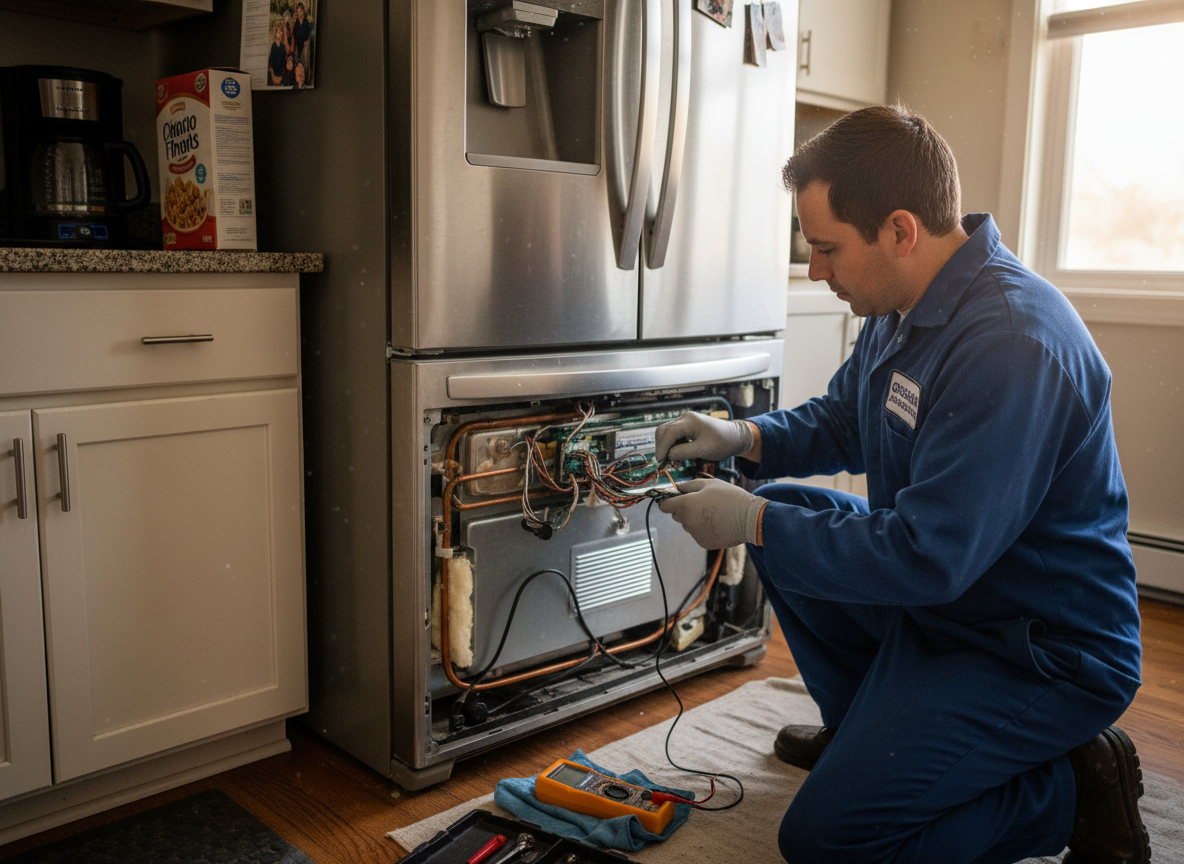
Gresham homes in Rockwood and near Mt. Hood Community College often date to the 1960s and 1970s with original wiring and limited insulation. Wet winters bring high humidity that leads to coil condensation, frost buildup, and compressor strain on older units. Flooding in low-lying spots around Downtown can short out bottom-mounted components if water reaches the kitchen level. Technicians check seals, defrost timers, and evaporator fans first because these fail most often when moisture lingers after storms.
Mild summers reduce heat load but power fluctuations from Portland grid strain during peak demand can trip start relays or damage control boards. In Multnomah County, many refrigerators sit in tight kitchen corners with poor airflow, so dust and pet hair accumulate faster on condenser coils. This cuts efficiency and raises energy use. Repair calls frequently involve cleaning coils, replacing door gaskets warped by repeated humidity cycles, and testing capacitors that weaken from repeated wet-season startups.
Refrigerator repair here requires verifying proper leveling on sloped lots common in eastern Gresham and confirming drain tubes are clear before winter returns. Blocked drains cause water to pool inside and freeze, cracking plastic liners. Technicians also inspect for R-134a or R-600a leaks at the compressor and evaporator because older homes lack dedicated appliance circuits and voltage drops accelerate wear on these parts.
Technician insight
In Gresham, the thing that catches most people out with Refrigerator repair is how wet winters push humidity into older Rockwood kitchens and cause repeated defrost failures on units that never fully dry out between storms. Homeowners often ignore slow drain clogs until the liner cracks.
Rockwood Home Fridge Not Cooling After Storm
A homeowner in Rockwood called after a wet spell when their refrigerator stopped cooling. We found the defrost drain clogged with debris and the heater element shorted from standing moisture. We cleared the line, replaced the heater and timer, restored proper airflow, and confirmed stable temperatures before leaving.
How it works
- 1
Initial Assessment
Arrive at the Gresham address, confirm symptoms, and check power supply, thermostat settings, and visible moisture damage from recent wet weather.
- 2
Component Testing
Test compressor, condenser fan, defrost heater, and control board while noting any humidity-related corrosion common in Rockwood homes.
- 3
Diagnosis and Quote
Identify the root cause, explain options, and provide an upfront quote before ordering parts or beginning work.
- 4
Repair and Verification
Replace or clean faulty parts, clear drains, level the unit, and run a full cycle to confirm stable temperatures and no leaks.
- 5
Final Walkthrough
Show the homeowner what was fixed, advise on humidity control during wet winters, and schedule any follow-up if needed.
Pricing
Upfront quotes provided after diagnosis; cost depends on model age, parts needed, and access in older Gresham homes.