Gresham homes built before the 1990s in Rockwood and Downtown often have galvanized drain lines and 120-volt circuits that corrode faster when winter rains push water under slabs. Dishwasher leaks here frequently short the door switch or flood the float assembly because mild summers give way to weeks of standing moisture that never fully dries. Technicians check the air gap first, then trace the high-loop hose routing that many older installs in Multnomah County omitted, which lets backflow from Portland-area sewers re-enter during heavy storms.
When a unit in a two-story Rockwood house near Gresham Pioneer Cemetery stops draining, the culprit is usually a clogged sump or failed check valve rather than the pump motor. Wet winters raise groundwater levels, so any crack in the drain hose lets silt into the impeller and shortens its life. Repair work includes replacing the hose with reinforced rubber rated for constant moisture and re-securing the unit so vibration does not reopen gaps in the cabinet seal.
Edge cases appear after power surges common during winter storms; the control board on many mid-2000s models loses its cycle memory and leaves the inlet valve open. In these situations the tech isolates the board, tests the thermistor for correct resistance, and confirms the door latch microswitch still interrupts power. Because Gresham sits on clay-heavy soil, any floor-level repair also includes checking that the leveling legs still sit on solid subfloor so the door does not bind after the ground shifts slightly from seasonal moisture.
Technician insight
In Gresham, the thing that catches most people out with Dishwasher repair is how wet winters and occasional flooding in Rockwood push silt into the sump through tiny hose cracks that never dry out between storms; the same clay soil that holds water also shifts older slabs enough to misalign the door latch after a simple pump swap.
Rockwood Drainage Failure After Heavy Rain
A homeowner in Rockwood reported water pooling under the dishwasher after three days of winter rain. Inspection showed silt had jammed the check valve and the original drain hose had a hairline crack allowing backflow. The valve and hose were replaced, the high-loop was restored, and the unit was re-leveled on the slightly settled floor; the next cycle drained cleanly with no further leaks.
How it works
- 1
On-Site Assessment
Technician arrives within the service window, unloads the racks, and runs a diagnostic cycle while checking for standing water and error codes.
- 2
Component Isolation
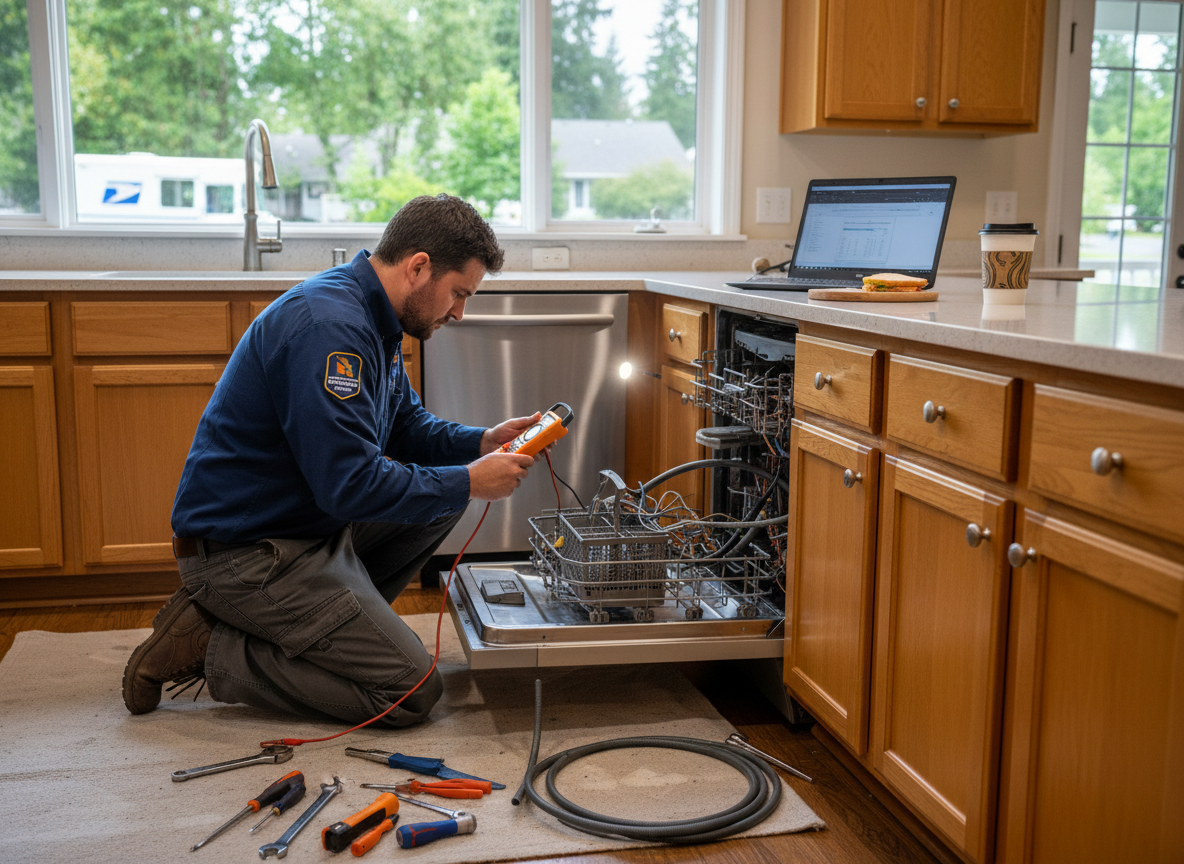
Power is disconnected, the toe panel is removed, and each part—pump, valve, float, and control board—is tested with a multimeter before any replacement.
- 3
Targeted Repair
Failed parts are swapped using manufacturer-matched components; hoses are rerouted to maintain the high loop and secured against vibration.
- 4
Leak and Function Test
The machine is leveled, a full cycle is run with the door open to verify no drips, and the customer watches the final drain to confirm proper flow.
Pricing
Upfront quotes are given after the diagnostic inspection so homeowners know the exact cost before any parts are ordered.