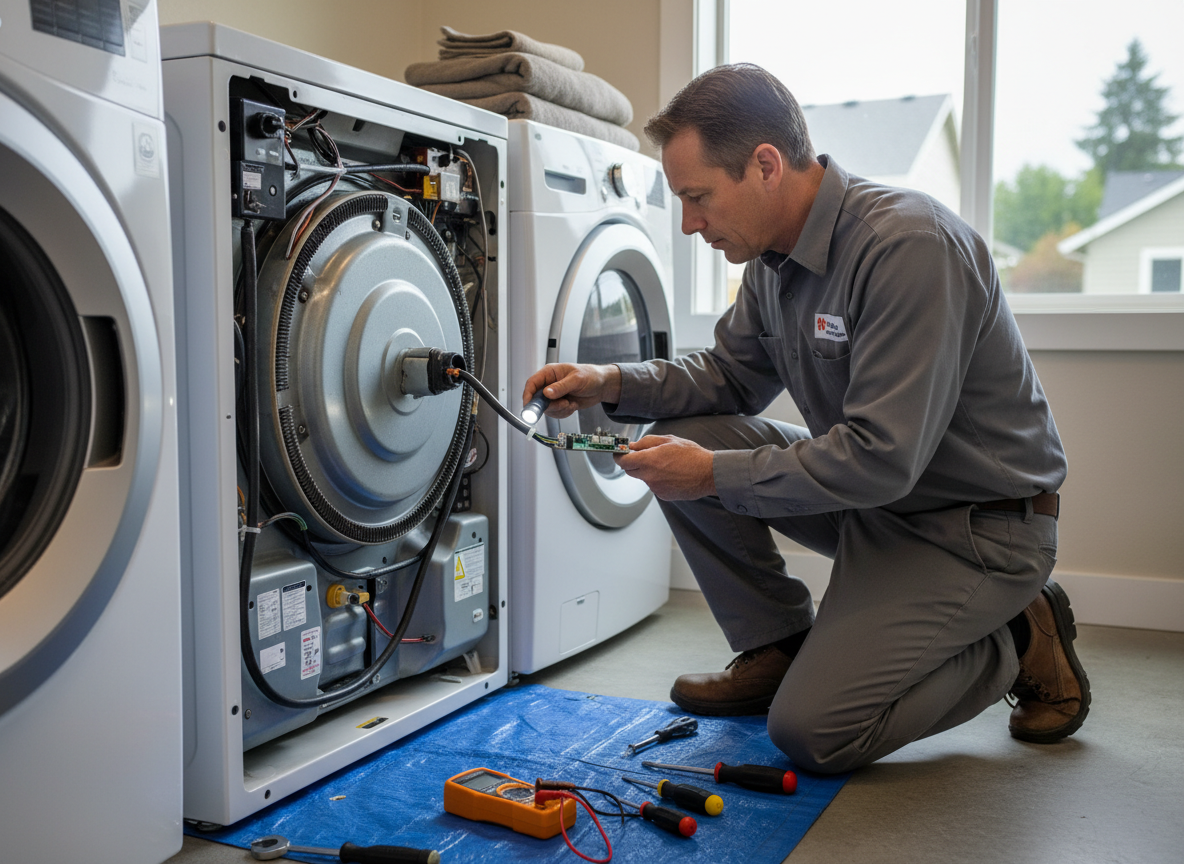
Gresham homes in neighborhoods like Rockwood and Downtown often feature older single-family houses built before the 1980s with narrow or poorly routed dryer vents that run through crawlspaces or exterior walls. Wet winters bring higher indoor humidity and occasional flooding that can push moisture into those lines, turning lint into a dense paste that restricts airflow and raises fire risk. Technicians familiar with Multnomah County conditions check the full vent run to the exterior termination rather than stopping at the machine, because a partial clean leaves the root problem untouched when mild summers give way to another damp season.
Electric dryers dominate in Gresham due to the prevalence of homes near Mt. Hood Community College and along Stark Street corridors, but gas models appear in some converted properties closer to Portland. Both types suffer when homeowners skip vent cleaning after noticing longer dry times, especially once winter rains increase indoor moisture load. A proper repair includes confirming the vent cap is clear of debris from nearby trees and that the duct material meets current fire code standards for flexible sections, preventing the repeated service calls that occur when only the lint trap area is addressed.
Terrain around Gresham Pioneer Cemetery and the surrounding hills creates slight elevation changes that affect how condensate drains in longer vent runs. In these spots, a kinked or low-point duct can trap water from the wet season, leading to corrosion on the dryer’s heating element or blower wheel. Addressing the slope and support of the duct during repair reduces repeat failures that homeowners in flatter Portland neighborhoods rarely encounter.
Technician insight
In Gresham the thing that catches most people out with Dryer repair is how our wet winters push moisture into older vent lines in Rockwood homes, turning ordinary lint into a clog that sits in low spots created by the slight hills near the cemetery. Homeowners usually only notice longer dry times once the heating element starts failing from the extra load.
Restricted Vent in Rockwood
A homeowner in Rockwood reported the dryer taking three cycles to finish loads during a wet winter. Inspection showed a low point in the duct where condensate had collected and packed lint against the wall penetration. The line was cleared, the run was adjusted for proper slope, and the dryer resumed normal operation without further moisture-related failures.
How it works
- 1
Initial Assessment
Technician arrives at the Gresham address, confirms symptoms, and inspects both the dryer and the visible vent sections.
- 2
Vent and Duct Inspection
Full run is checked from machine to exterior termination, noting any low spots or moisture accumulation common after wet winters in Rockwood.
- 3
Component Diagnosis
Heating element, thermostat, and blower are tested for failure caused by restricted airflow.
- 4
Repair and Verification
Necessary parts are replaced, vent is cleared or rerouted for proper slope, and a full cycle is run to confirm airflow and temperature.
Pricing
Upfront quotes are given after inspection so homeowners know exact costs before work begins.