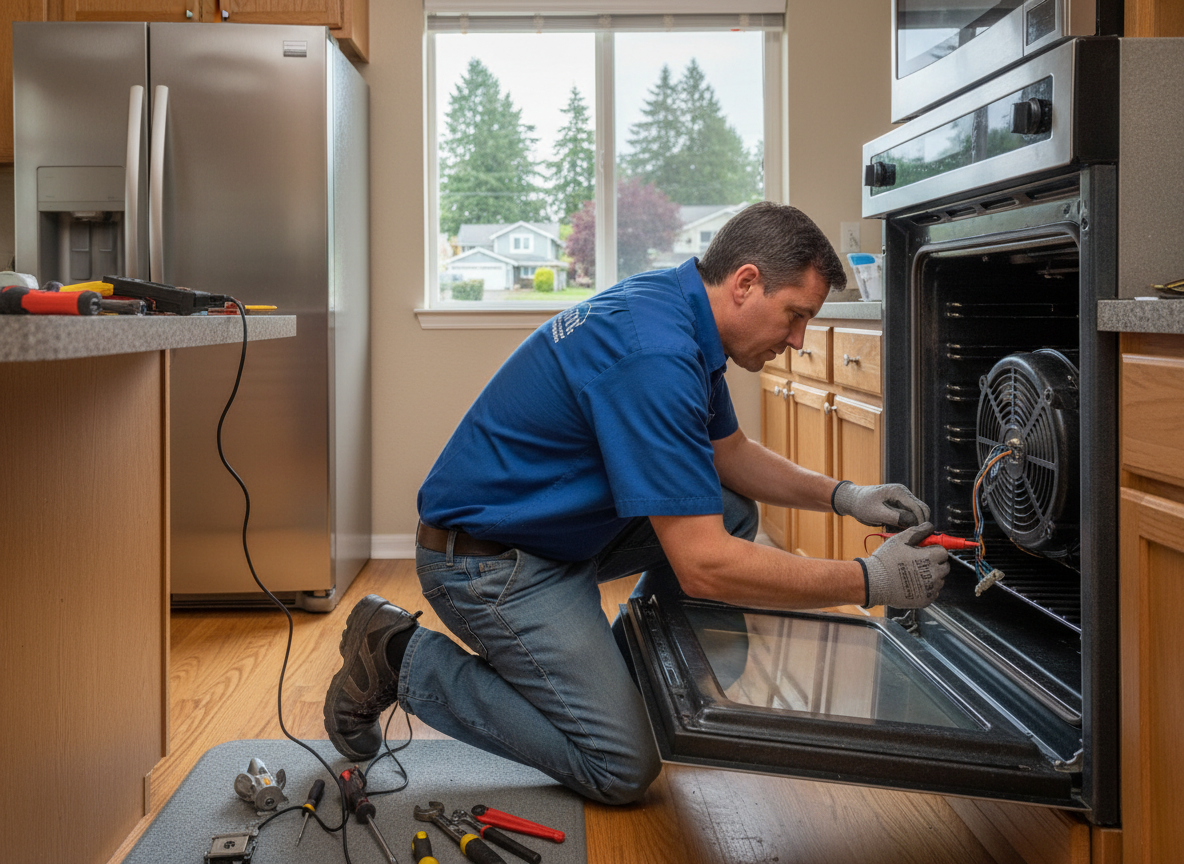
Gresham’s older housing stock in Rockwood and around the Gresham Pioneer Cemetery often features electric ovens installed decades ago that struggle with the area’s wet winters. Moisture from occasional flooding seeps into crawl spaces and affects wiring runs, leading to intermittent heating element failures and tripped breakers that homeowners first notice during the shift from mild summers. Technicians at 21255 SE Stark St routinely trace these faults to corroded connections rather than the element itself, especially in homes built before widespread use of GFCI protection in kitchens.
Mt. Hood Community College area residences frequently report oven temperature inaccuracies after years of service because the calibration drifts on older mechanical thermostats exposed to humidity swings common in Multnomah County. Gas ovens in Downtown Gresham apartments can develop igniter problems when dust from nearby Portland commutes combines with winter dampness inside the burner compartment. Proper diagnosis requires checking both the igniter resistance and the gas valve solenoid, since replacing only the igniter leaves the underlying moisture issue untouched.
Repair work here must account for the county’s variable terrain; homes on slight slopes near Stark Street experience more vibration that loosens door hinges and affects latch switches over time. Technicians carry both 220-volt and gas-rated parts on 24/7 calls because switching between electric and gas models happens often when families move within the same neighborhood. Always verify the model number against the oven’s data plate before ordering components, as many 1990s units in Gresham still use proprietary connectors no longer stocked at big-box stores.
Technician insight
In Gresham, the thing that catches most people out with oven repair is how wet winters push moisture into older Rockwood wiring runs, making what looks like a bad element actually a corroded terminal at the junction box. Homeowners near Mt. Hood Community College often replace parts twice before the real issue shows up on the second visit.
Rockwood Oven Temperature Drift
A homeowner in Rockwood reported their electric oven taking twice as long to reach temperature after several wet winters. Inspection found corroded spade connectors on the bake element caused by humidity entering the back panel. We cleaned the terminals, replaced the element and sensor, then verified stable 350-degree performance across multiple cycles.
How it works
- 1
Initial Assessment
Arrive at the Gresham address and confirm symptoms while checking power supply and gas line integrity.
- 2
Component Testing
Measure resistance on heating elements, igniters, and sensors using multimeter readings specific to the model.
- 3
Moisture and Connection Inspection
Examine wiring runs and terminals for corrosion caused by wet winters common in Rockwood and Downtown.
- 4
Repair and Verification
Replace failed parts, restore connections, then run multiple cycles to confirm stable temperature and door operation.
Pricing
Upfront quotes provided after diagnosis; cost depends on parts availability and whether electric or gas components are needed.