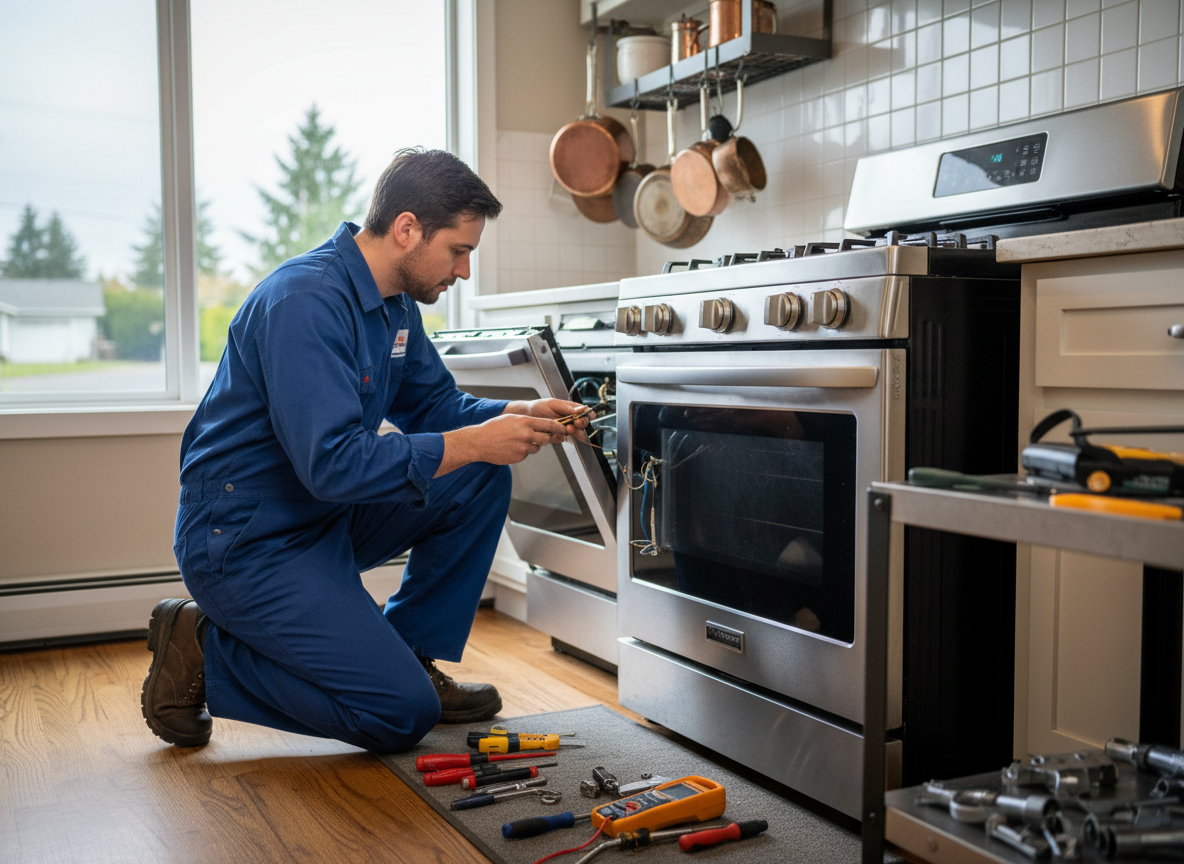
Gresham homes built before the 1980s in Rockwood and near Mt. Hood Community College often have original electric ranges or gas stoves that develop intermittent igniter failures after repeated exposure to the area's damp winters. Moisture seeps into wall cavities and reaches the back panels of appliances, corroding wiring harnesses and causing burners to click without lighting or ovens to fail to reach temperature. Technicians working these jobs routinely pull units away from walls to inspect for water staining on the floor and check that the 240-volt circuit remains intact before any part replacement.
Flooding events along the low-lying sections of SE Stark Street can push water under cabinets and into the lower compartments of freestanding ranges. When this happens the bake element or gas valve assembly shorts or sticks, and homeowners notice uneven heating or a persistent gas smell. Repair calls in these conditions require verifying that the appliance is on a dedicated circuit and that the anti-tip bracket is still secured, because older Multnomah County housing stock frequently lacks updated grounding.
Mild summers do not stress cooling fans the way winter humidity does, so most oven and stove failures in Gresham appear between November and March. Parts such as spark modules and oven sensors are ordered from Portland suppliers and installed the same day when the model is common in local homes. Technicians always test both high and low settings after repair and advise residents to keep the area behind the range clear of stored items that can trap moisture.
Technician insight
In Gresham, the thing that catches most people out with oven and stove repair is how wet winters push moisture into the back of ranges in Rockwood homes built on older slabs. Homeowners often replace the igniter only to have the same failure return because the wiring harness behind the unit stayed damp. Checking for water staining on the floor and pulling the appliance completely out every time prevents repeat calls.
Igniter Failure After Winter Flooding
A Rockwood homeowner reported the oven would not heat after several days of heavy rain. Inspection showed water had reached the lower compartment and corroded the bake element terminals. The element and affected wiring were replaced and the area dried before reinstallation. The range now cycles correctly on both bake and broil.
How it works
- 1
Safety Shutoff and Visual Inspection
Disconnect power or gas at the source and examine the unit for water damage or loose connections common in older Gresham homes.
- 2
Component Testing
Use multimeter checks on igniters, elements, and valves while noting any corrosion from wet winter conditions.
- 3
Diagnosis and Parts Sourcing
Identify the failed part and confirm availability from Portland suppliers before quoting.
- 4
Repair and Reassembly
Replace or clean the component, reinstall the range, and verify the anti-tip bracket remains secure.
- 5
Function Verification
Run full heat cycles on all modes and confirm no gas odor or error codes remain.
Pricing
Upfront quotes given after inspection; final cost depends on part availability and whether the unit is electric or gas.