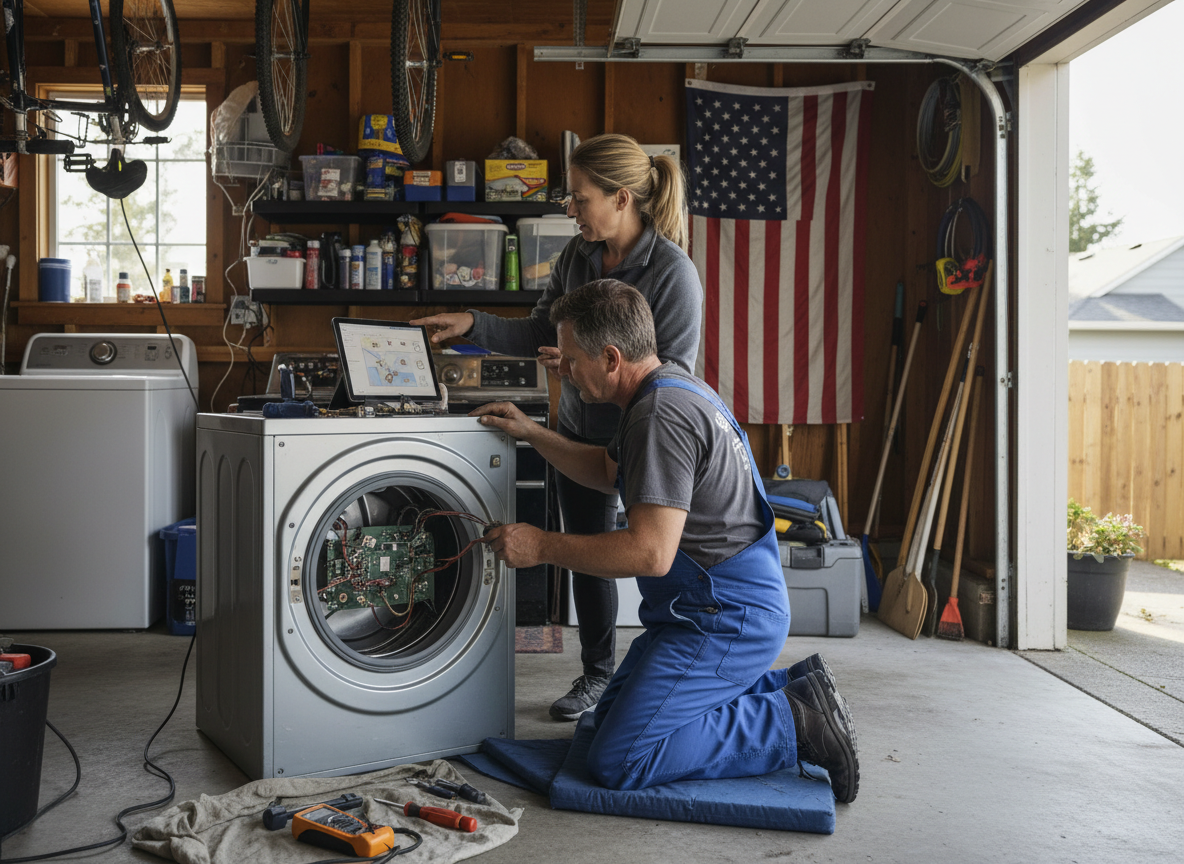
Gresham homes built before the 1980s in Rockwood and around Mt. Hood Community College often have laundry setups in damp basements or garages where wet winters bring occasional flooding and high humidity. This moisture accelerates rust on washer tubs, corrodes dryer vents, and causes electronic control boards to fail faster than in drier climates. Technicians see repeated inlet valve leaks on machines that sit on older concrete slabs without proper drainage slopes, especially after heavy rain events common in Multnomah County.
Mild summers reduce some heat-related failures but do not offset the winter moisture load on exhaust systems. Dryers in Portland-adjacent neighborhoods frequently pull in pollen and fine dust that clogs lint traps and blower wheels when homeowners run shorter cycles to save energy. Proper vent cleaning requires checking the full run to the exterior wall, something that becomes harder in tightly spaced Rockwood lots where additions have altered original routing.
When a top-load washer develops a slow drain in these older homes, the issue is often a combination of soap residue buildup and partial vent blockage rather than a single pump failure. Replacing the pump without addressing the vent leads to repeat calls within weeks. Service calls start with checking both the appliance and the home’s drainage tie-in points to avoid that cycle.
Flood-prone areas near the Gresham Pioneer Cemetery require extra time to inspect lower-level installations for hidden water damage on wiring harnesses. Homeowners in these spots benefit from scheduling checks before the first heavy rains arrive each fall.
Technician insight
In Gresham, the thing that catches most people out with laundry appliance repair is how wet winters push humidity into Rockwood basements and garages, rusting washer tubs and clogging dryer vents long before the machine itself fails. Homeowners near Mt. Hood Community College often skip annual vent cleaning because the mild summers make the problem feel less urgent until a flood event hits the drain lines.
Clogged Dryer Vent After Winter
A Rockwood homeowner reported the dryer taking three cycles to finish clothes. Inspection showed the exterior vent flap stuck from winter moisture and pollen buildup. Clearing the full vent run and replacing the flap restored normal drying times without replacing the heating element.
How it works
- 1
Initial Assessment
Arrive at the Gresham address and run the machine through its cycle while checking power, water supply, and drain lines.
- 2
Diagnosis
Isolate the failed component, whether a pump, heating element, or control board, and confirm the root cause tied to local moisture or age.
- 3
Repair or Replace
Perform the fix on site using parts suited to the model and explain any home-side adjustments needed for wet winters.
- 4
Test and Verify
Run a full cycle, check for leaks or heat issues, and confirm proper venting before leaving the Rockwood or Downtown location.
Pricing
Upfront quotes given after diagnosis with no hidden fees.