Gresham homes in Rockwood and Downtown often sit on older foundations where wet winters bring occasional flooding that seeps into basements and utility rooms. This moisture reaches refrigerators, washers and ovens faster than in drier parts of Portland, creating corrosion on wiring and control boards that only shows up after the first hard rain. Technicians at 21255 SE Stark St keep vans stocked with sealed connectors and moisture-rated parts because standard replacements fail again within one season when water sits under the units.
Mild summers do not reduce the workload because residents near Gresham Pioneer Cemetery and Mt. Hood Community College run air conditioners and dehumidifiers continuously to fight indoor humidity left over from spring flooding. These extra loads trip breakers and wear out compressor relays on older units common in Multnomah County housing stock built before updated electrical codes. A 24/7 call often starts with checking panel capacity before touching the appliance itself.
Terrain along Stark Street slopes toward Johnson Creek, so runoff pools behind garages and laundry rooms in Rockwood. Any appliance set on slab floors there needs extra attention to drain lines and leveling feet that shift when soil saturates. Skipping this step turns a simple part swap into repeat visits after the next storm.
Seasonal Flood Readiness
Before winter arrives, check that washer and dishwasher drain hoses clear the flood line by at least six inches and that dryer vents exit above grade. Homes near the cemetery often have crawl spaces that collect water; placing appliances on raised platforms prevents direct contact with damp concrete and reduces corrosion on lower panels.
Technician insight
In Gresham the thing that catches most people out with 24/7 appliance repair is the way wet winters push water under slab floors in Rockwood homes built before modern grading. A fridge or washer that looks fine on the surface often has corroded wiring hidden underneath once the soil saturates near Johnson Creek. Homeowners who skip checking the floor grade after a storm end up calling again within weeks.
Midnight Washer Failure After Heavy Rain
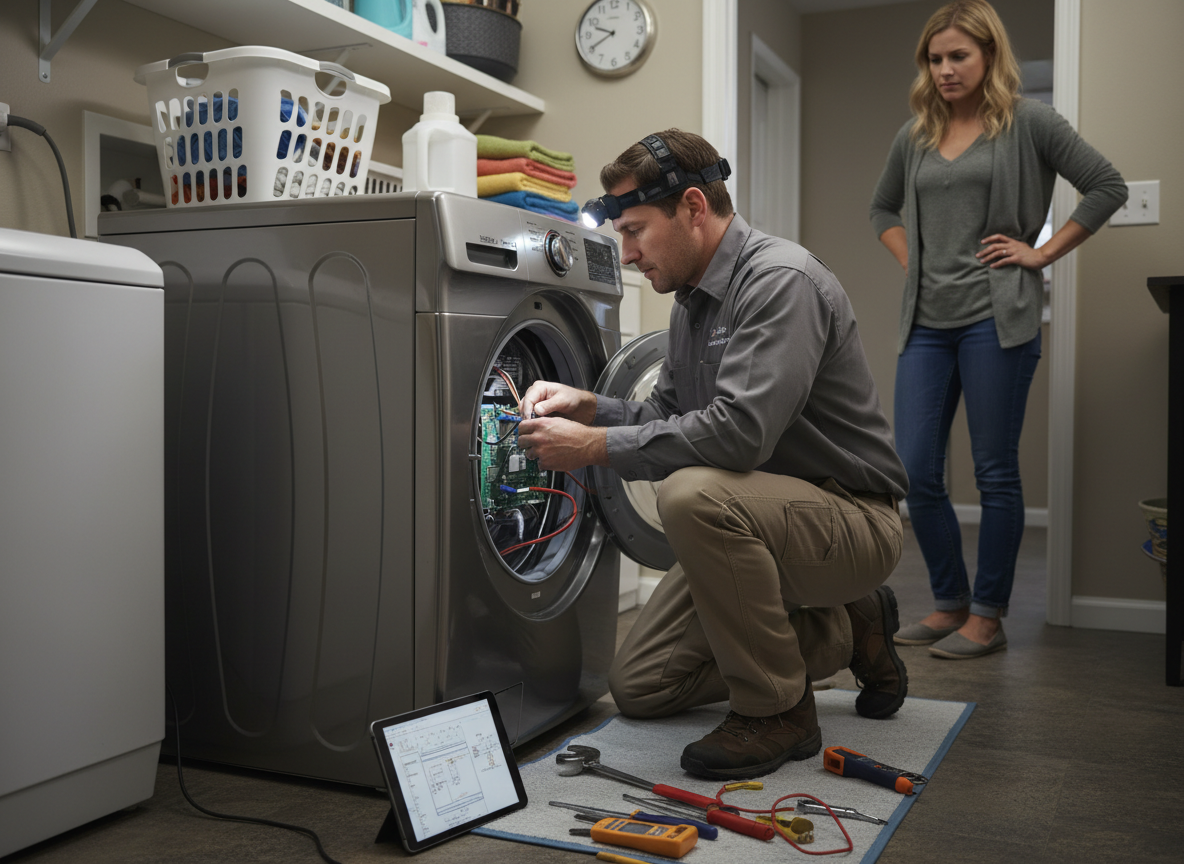
A Rockwood resident near Mt. Hood Community College called at 1 a.m. after the washer stopped mid-cycle during a storm. Standing water had reached the lower wiring harness and tripped the moisture sensor. The tech replaced the harness, raised the unit on blocks to clear future runoff, and confirmed normal operation before leaving.
How it works
- 1
Call Intake
Answer at any hour, confirm the address in Gresham or Rockwood, and note whether flooding or power issues are present.
- 2
Arrival and Safety Check
Tech reaches the site within the stated window, verifies power at the panel, and isolates the unit from water if recent rain has affected the area.
- 3
Diagnosis
Test components in place, identify whether corrosion from Multnomah County moisture or simple wear caused the failure.
- 4
Repair or Replace Decision
Explain options on site, complete the repair when parts are on the truck, and schedule return if a specialty part is needed from Portland suppliers.
- 5
Final Test and Cleanup
Run the appliance through a full cycle, confirm no leaks or tripped breakers, and leave the area as found.
Pricing
Upfront quotes given before any work begins; rates reflect time of day and parts required.